Greedy Eating - March
A very good month of eating

What I’m surprised by
I really thought the grotesque habit of serving food with large shavings of truffle would be gone by now, but it seems to be continuing apace. Truffle is sometimes delicious – in a simple sauce with pasta, for instance – but is almost always a grotesque and lazy wealth signifier. Its continued popularity is an indicator of increasing feudalism and the laziness of expensive taste.
But truffle isn’t enough, it seems, since caviar is also having a moment – consumed as a ‘bump’ from the hand, atop a burger or pizza – an even scarier indicator. Besides, a critique of consumption and wealth aside, it is incredibly declassé to consume caviar with anything but blini or half-cut boiled potatoes. Or, if you’re my friend Gwantsa, in lunch-time sandwiches during Georgia’s brutal civil war.
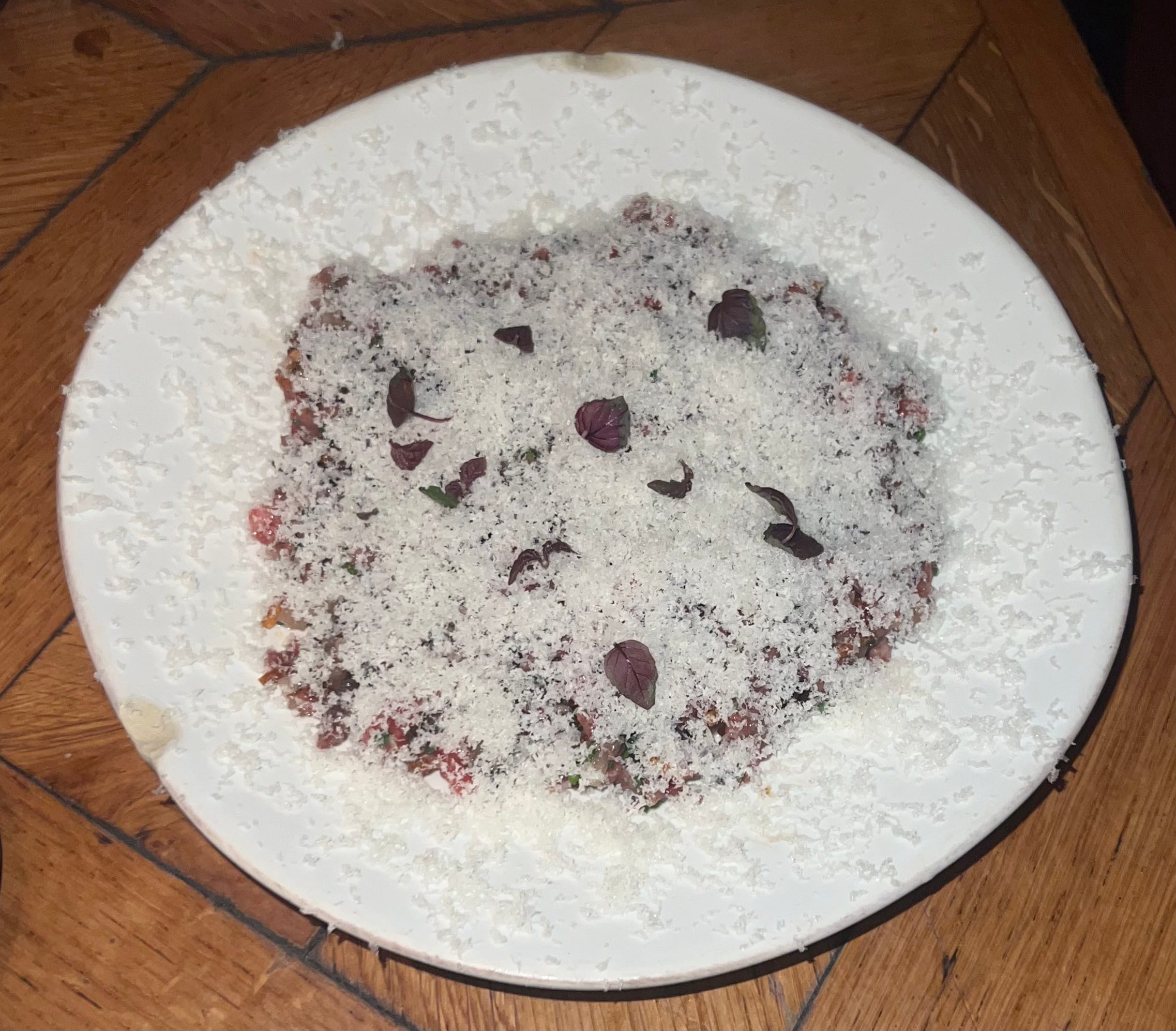
Something I’m not unhappy about, but am surprised by, is the soaring popularity of steak tartare, once the preserve of French restaurants. I love steak tartare and have recently had some quite good takes, though I’ve had some terrible versions too – over-seasoned, covered with cheese, slick with kewpie mayo. Pessimistic, I think the spreading tartare will lead to many more of the latter. How long before one can gnaw ex-dairy mixed with caviar, topped with truffle?
This month features someone who doesn’t own a restaurant and someone whose restaurant has not even opened. Ephemeral for a list of recommendations, perhaps, but they are public cooks nonetheless, and if you have the chance to eat their food you should jump at it. Also, a film and a book. I’m off to NYC at the end of April, and I will report on what I eat and see in the burning heart of empire. If you have recommendations, send them my way.
Gary’s Oyster & Fish
Sundays 10-2
London Fields Primary School
CASH ONLY
Gary has grey hair and a weathered complexion from time on his boat. He looks fifty, which is extraordinary since he’s in his seventies. He purveys oysters each Sunday and, depending on the season and weather, various other crustaceans and fish farmed or caught off the Essex coast – clams, whitebait, dogfish, skate and native oysters. His van is a bit beat up, and there’s nothing fancy or knowing about him or his operation, he’s just selling fish – it reminds me of something I’d see regularly in the countryside and outer suburbs, but almost never in London’s ever expanding centre.
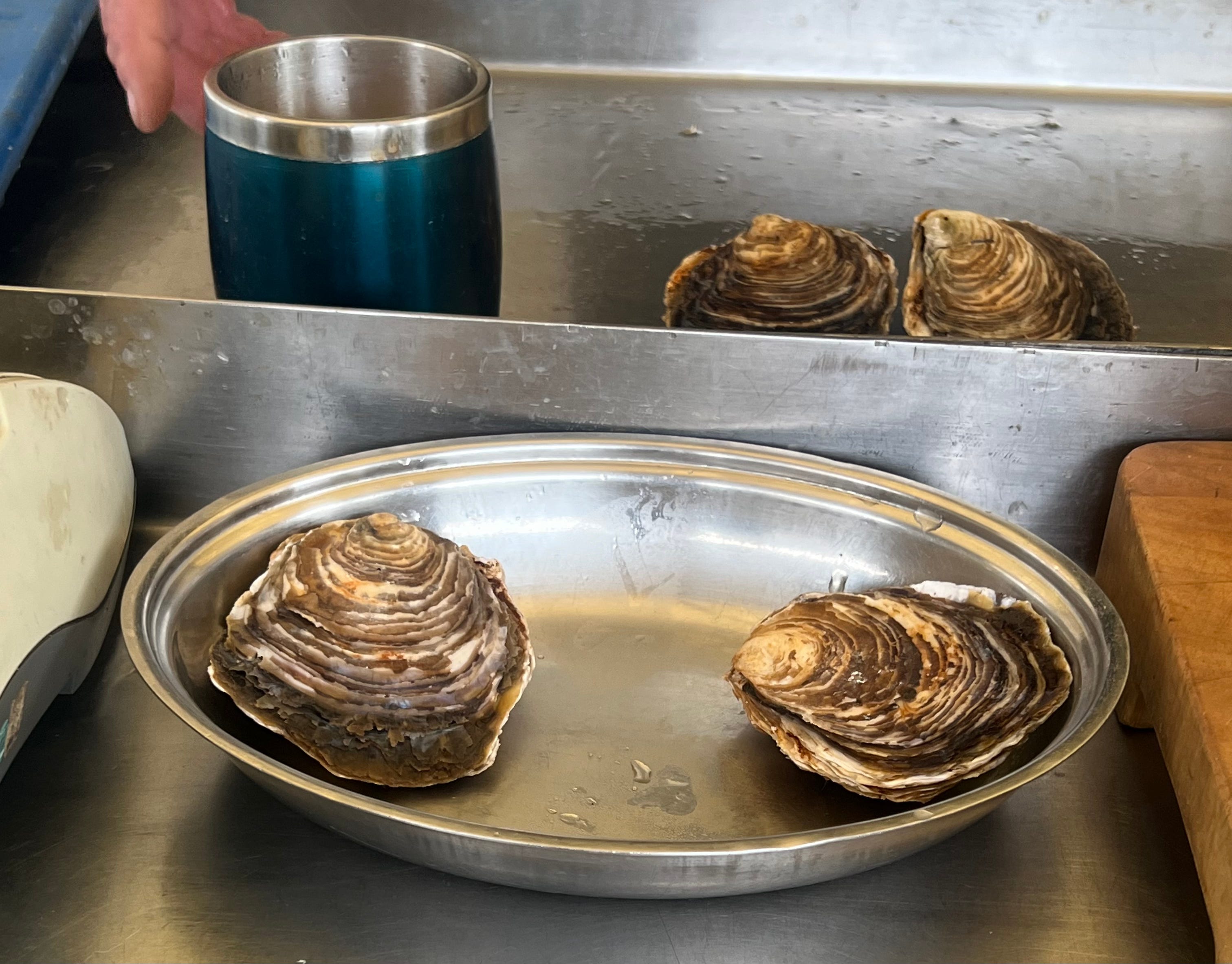
His oysters are excellent, and though they’re not strictly wild, they’re from formerly farmed oysters that have gone to seed. I’m not entirely sure what this means, other than they seem better than any I’ve had in London. Or so I thought, until one day in winter when he had a tray of natives, which were tastier, a pearlescent and rounded variety that come from the British waters, unlike the commoner oblong rock oysters, which originate from the Americas. Native oysters are in a class above – large and succulent without any snotty sperminess. The clams, which he serves like oysters, have a more earthy flavour, perhaps more palatable to the uninitiated – gateway molluscs.
He catches his fish in an antiquated net he built himself, which he hand-winches onto his small boat. What’s on offer – sometimes he only has rock oysters – is a real lesson in how seasonal fishing actually is, since, practised properly, it’s hunting, not husbandry. His catch is inexpensive (I’d say down-right cheap considering how special it is) and always fresh. The schoolyard is a wonderful place to escape the madness of London Fields and the now-horrible Broadway Market, and there’s nothing to stop you from buying a bottle and a dozen oysters to enjoy in the park.
I’d gatekeep Gary’s if I didn’t really want him to sell-out.